
15/11/2026 0 Comments
Thought for the Week - 15 November 2026
Thought for the Week - 15 November 2026
# News
Thought for the Week - 15 November 2026
Readings:
Zephaniah 1:7, 12-end; Psalm 90:1-8, 12; 1 Thessalonians 5:1-11; Matthew 25:14-30
Collect: :
Heavenly Lord, you long for the world’s salvation:
stir us from apathy,
restrain us from excess
and revive in us new hope
that all creation will one day be healed
in Jesus Christ our Lord. Amen
Reflection:
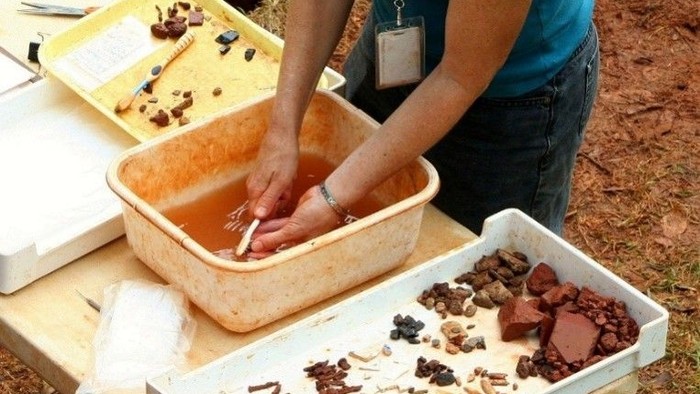
Corbridge is a very lovely ancient town in Northumberland, just off Hadrian’s Wall. It was, originally a Roman fort and developed into a settlement. When Hadrian’s Wall was built in 122CE it became a thriving town, the most northerly of the Roman Empire, providing various goods and services for the military whose numbers were growing since the Wall had been built. The location of the town eventually shifted slightly east of the original Roman town, but unlike many Roman towns whose buildings, and then ruins slowly disappeared, many of the Roman ruins of the original town at Corbridge are still present and visible to people today. This of course makes it an attractive site for archaeologists, and it is unsurprising that the local universities have regular digs there, to explore the site, and to train new archaeologists.
In 1964, there was one such archaeological dig by Newcastle University. The archaeologists dug out a series of trenches, one of which clipped the corner of an iron bound wooden chest. When the archaeologists excavated the chest, they discovered when has been described as a time capsule. The chest was full of interesting items. Pieces of armour, spear heads, a sword scabbard, artillery bolts, joiner’s dogs, a pulley block, a small wooden bucket, a tankard and small writing tablet. And although it wasn’t coins and ‘precious’ objects, it was classed as a hoard. There are many theories to why this collection was buried, including being buried to protect it from raiding barbarians. Whatever the reason, the hoard, like so many hoards, was buried, almost certainly to keep it safe until the owner could return. But the owner never returned, and so that which was so valuable to them that it was buried, was in fact lost.
When we are worried about something, whether material or otherwise, we often bury it to hide it, to keep it safe. But that isn’t always the answer. In the parable in Matthew’s gospel, the master gives his labourers an extraordinary amount of money. A talent was approximately 20 years wages for a labourer. The master clearly has an idea of who he thinks will use the talents well when he distributes them, with the more confident and savvy labourers investing the talents, which yielded good returns. The last labourer, who was clearly nervous of his master, and had only been given one talent, felt that the safest option was to bury it. And in some ways it was, it was still there when he went back to it and he could return it to his master. But that’s all he could return. What had been given to him had not grown or increased.
As children of God, he too gives us talents. Our talents are the gifts that God give us. There is a nice coincidence with the other meaning for the word talent here, because God’s gifts can often be expressed as a talent. There are obvious gift such as singing or other musical abilities, artistic abilities, or being gifted at design. You can be talented in practical skills such as carpentry, or more cerebral skills such as mathematics, or science.
But there are other gifts. Listening, spending time with people, being able to identify when someone is in need, being able to nurture, working with young people, leading intercessions, being an encourager, or being given the gift of wisdom.
There are so many gifts that we are given from God, and they are not to be buried away. We need to find the courage to use and share these gifts, not only with the church community, but also with the wider world. God’s gifts are not only things that are for our own flourishing, but they are for the flourishing of those around us and for all of God’s children. Because when we share the gifts that God has given us, we are like the labourers, who invested their talents. In sharing the gifts God has given us, we are investing them in others, and they grow and develop, enriching the life of the church and our community.
So, I encourage you to spend some time with God, to ask him to show you the gifts that he has given you (you may need to ask for some support from our ministers in discerning these gifts) and ask God how he wants you to use them, to the benefit of all of us and to the glory of God.
Revd Kath Long.
Comments